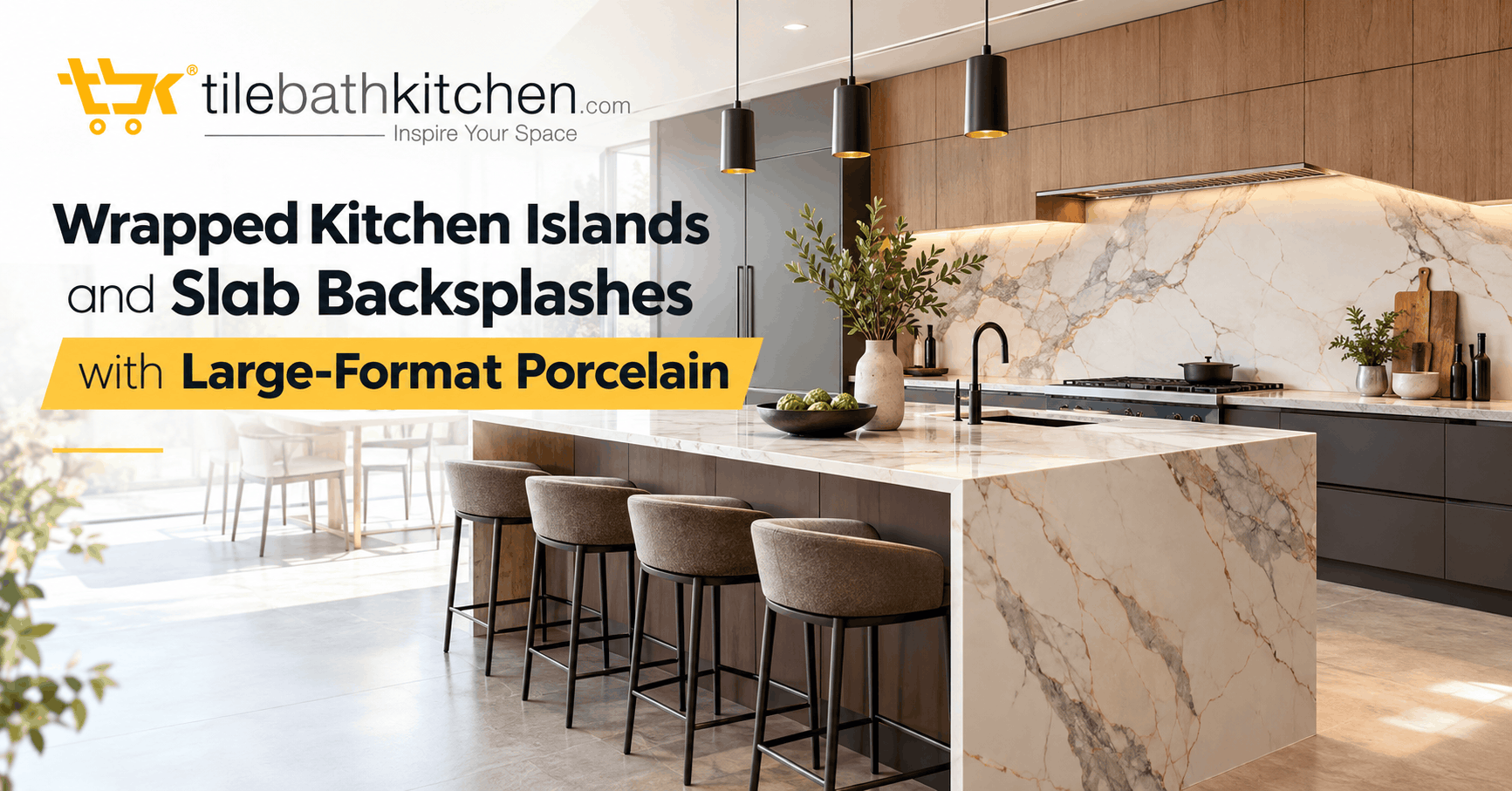
For years, Indian kitchens followed a familiar formula: granite countertop, small tiles on the backsplash, and a different tile on the floor. That formula is changing. Large-format porcelain slabs, often 1200 x 2400 mm or bigger, now let designers cover a countertop, backsplash and even the sides of a kitchen island in one continuous material.
The result is a kitchen that looks seamless and sculptural. The most talked-about version is the wrapped island, where the slab runs over the top and down the sides so the island reads as a single solid block.
What Is a Wrapped Kitchen Island?
A wrapped island uses the same slab material on the countertop and on one or more vertical sides. In some designs, the floor tile continues up the island sides too, so the island looks as if it rises out of the floor.
It works best with stone-look porcelain, such as marble, travertine or concrete effects, because the veining or texture flows across the corners. With a good installer, the pattern can be matched at the edges so the island looks carved from one piece.
Slab Backsplashes: Fewer Joints, Cleaner Walls
A slab backsplash replaces small tiles with one or two large panels behind the counter. This brings two big benefits for Indian kitchens.
Fewer grout lines. Grout behind the hob is where oil and masala stains build up. A slab backsplash has very few joints, so there’s much less to scrub.
A calmer look. One continuous surface makes a small kitchen feel larger and more open, especially when the slab matches the countertop.
Porcelain Slabs vs Granite vs Quartz
Granite is the traditional Indian choice. It’s tough and heat-resistant, but it’s natural stone, so the colour and pattern vary, it needs sealing, and it’s heavy. Wrapping an island in granite is possible but expensive and hard to match.
Quartz is engineered stone with a consistent look and low porosity. However, it can be damaged by direct heat from hot kadhais and pressure cookers, and it can discolour under strong sunlight.
Porcelain slabs are fired at very high temperatures. They’re heat-resistant, scratch-resistant, stain-resistant and non-porous, and they don’t need sealing. They’re also thinner and lighter, which makes them suitable for walls and vertical island sides.
The trade-off: porcelain slabs can chip at the edges if hit hard, and cutting and installing them needs specialist tools and an experienced team. A poorly installed slab is hard to repair.
Sintered Stone: A Close Cousin
You’ll also hear the term sintered stone. It’s made in a similar way to porcelain, using high heat and pressure, and it offers similar benefits. Some brands use the terms loosely, so ask your supplier for the actual specification, thickness and warranty rather than relying on the label.
Design Ideas That Work
- Marble-look slab, full wrap. Countertop, backsplash and island sides in one white or beige marble effect for a luxury feel.
- Concrete-look island with wood cabinets. A grey or greige slab island balances warm timber shutters.
- Dark slab backsplash with light cabinets. A charcoal or deep green slab behind the hob adds drama and hides stains.
- Floor-to-island continuity. Run the same large-format floor tile up the island sides for a quiet, architectural look.
Practical Points Before You Commit
Check access. Large slabs need to come up the stairs or lift and through the door. In older Mumbai buildings or small lifts, this can rule out the biggest sizes. Measure before you order.
Choose the right thickness. Thinner slabs suit walls and island sides. Countertops usually need a thicker slab or a properly supported base.
Plan cut-outs early. The hob, sink and any sockets need cut-outs made precisely. Finalise appliance models before the slab is cut.
Ask about edge profiles. Mitred edges give the cleanest wrapped look but are more delicate. Slightly eased or rounded edges resist chipping better in a busy kitchen.
Hire experienced installers. Ask the dealer to recommend a team that has done slab work before, and look at their past projects.
Is It Worth the Cost?
Porcelain slab work usually costs more than standard tiles plus granite, mainly because of specialist installation. But you get a kitchen that is easier to clean, resists heat and stains, and looks high-end for years. For homeowners planning a long-term kitchen, the extra cost is often justified.
The Bottom Line
Wrapped islands and slab backsplashes turn the kitchen from a collection of materials into one clean, continuous design. Large-format porcelain makes this possible at a lower weight and with less maintenance than natural stone. Plan the logistics carefully, pick an experienced installer, and the result can transform even a modest kitchen.