For a long time, the safe choice for an Indian bathroom was white or light grey tiles from floor to ceiling. They look clean, they’re easy to buy, and they never go out of style. But many homeowners now find them cold and clinical.
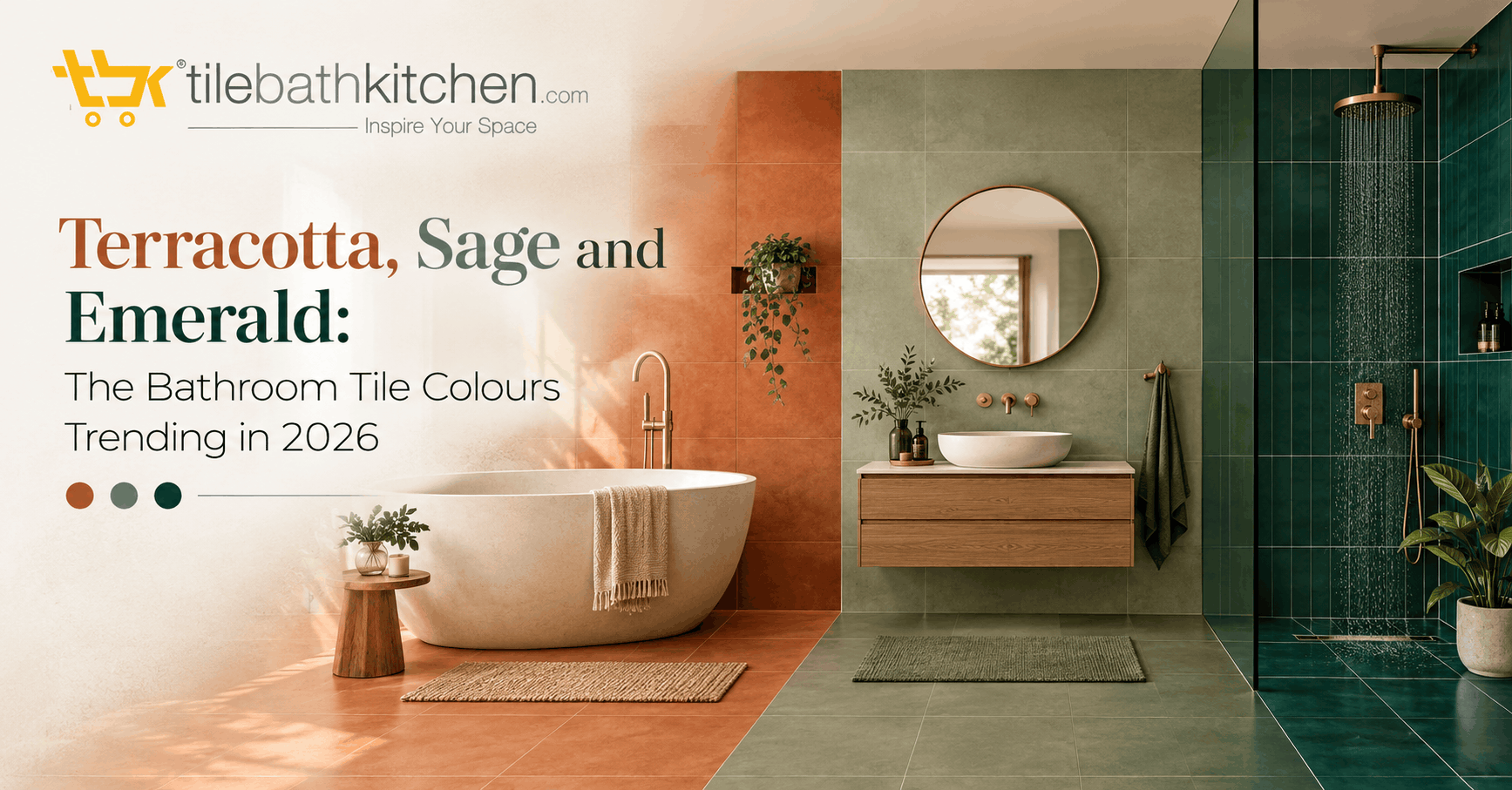
The new direction is warmer and more colourful. Earthy shades such as clay, terracotta, taupe and soft green, along with richer emerald and deep navy, are bringing personality back to bathrooms. These colours still behave like neutrals in many ways, but they add depth and warmth that white can’t.
Why Bathrooms Are Getting Warmer
Bathrooms are no longer seen as purely functional rooms. People want them to feel relaxing, like a small retreat at the end of the day. Earthy colours connect to nature and feel calm and grounding. They also suit Indian homes well, where warm tones, natural materials and handcrafted textures already have a long tradition.
The Colours to Know
Clay and terracotta. Warm, sun-baked tones that feel natural and welcoming. They pair beautifully with wood, brass and cane.
Taupe and greige. Softer earthy neutrals for anyone who wants warmth without much colour.
Sage and soft green. Fresh and calming, and very easy to live with. Works well with white sanitaryware and light wood.
Emerald and forest green. Rich and dramatic. Ideal for a feature wall or a powder room.
Deep navy. Moody and elegant, especially with brass or gold fittings.
How to Use Colour Without Making the Bathroom Dark
Most Indian bathrooms are compact, and many have small windows. Strong colours can make them feel smaller if used everywhere. These approaches avoid that.
One feature wall. Use the colour on the wall behind the vanity or the shower wall, and keep the rest light. This adds impact without closing the room in.
Colour on the floor only. A terracotta or green floor with light walls grounds the room and keeps it bright.
The half-wall approach. Tile the lower half of the walls in colour and keep the upper half light or painted. This is a classic look that works in small spaces.
The shower zone. Tile only the shower area in a deep colour to create a separate, cocooning zone.
Full colour drench. In a powder room or guest toilet, you can go bold and use one colour on every surface. Small rooms that are used briefly can handle drama.
Finishes and Textures
Colour looks richer with texture. Handmade-look tiles with slightly uneven glazes, zellige-style tiles, and matte finishes all make earthy colours feel more natural. Glossy finishes reflect more light, which helps in a small bathroom, but they can make strong colours look harsher. A soft satin or subtle glaze is often the best balance.
For floors, always choose an anti-skid or matte finish for safety.
Pairing with Fittings and Fixtures
- Terracotta and clay pair well with brushed brass, matte black, and light oak.
- Sage green looks fresh with white sanitaryware, chrome, and natural wood.
- Emerald green suits gold or brass fittings and white marble-look accents.
- Navy works with brass, white, and warm wood.
Keep sanitaryware white or a soft neutral so the tile colour stays the feature.
Lighting Matters
Colour changes a lot with light. Warm white bulbs make earthy tones glow, while cool white light can make them look dull. Use warm white lighting, and add a mirror light so the colour doesn’t make your face look shadowed. Always check a tile sample in your actual bathroom light before buying.
Practical Tips
- Check the batch. Coloured tiles can vary between production batches. Buy all you need at once, plus extra for breakage.
- Choose grout to match. A grout colour close to the tile keeps the colour looking rich and continuous.
- Think long-term. Earthy tones are less likely to feel dated than trendy bright colours.
The Bottom Line
You don’t need to choose between a clean bathroom and a warm, characterful one. Earthy and deep-toned tiles bring personality and calm to the bathroom, and with smart placement they work even in small spaces. Start with one wall or the floor, and let the colour turn a plain bathroom into a place you actually enjoy.