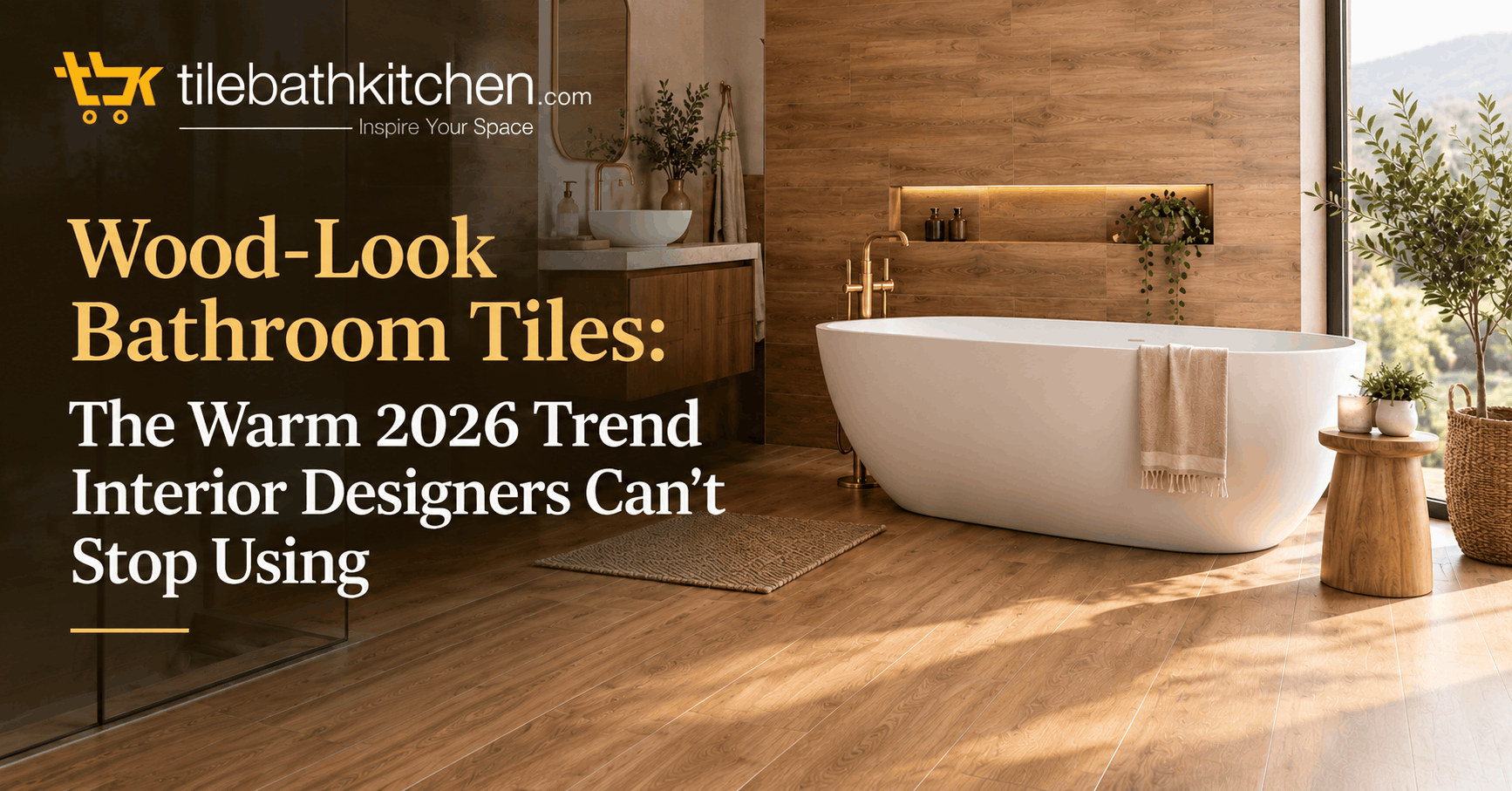
Wood makes any room feel warm and welcoming, but real wood and bathrooms don’t mix. In humid Indian bathrooms, timber can swell, warp, rot and grow mould. That’s why wood-look tiles have become one of the most popular bathroom choices. They give the look of timber with the water resistance of porcelain.
The newest direction goes further than plain plank floors. Designers are laying wood-look tiles in herringbone patterns on shower walls and using them to create warm, spa-like bathrooms.
Why Wood-Look Tiles Suit Indian Bathrooms
Water resistance. Porcelain wood-look tiles absorb very little water, so they won’t swell or rot.
Low maintenance. No polishing, oiling or sealing like real wood. Mop and go.
Realistic look. Modern digital printing and textured surfaces copy wood grain, knots and colour variation closely.
Warmth. They soften the cold, hard feel of an all-tile bathroom and pair beautifully with plants, cane and natural fabrics.
Herringbone Shower Walls
Herringbone is a zig-zag pattern where rectangular tiles meet at right angles. On a shower wall, it adds movement and craftsmanship, turning a plain wall into a feature.
Vertical herringbone points upwards and makes a low ceiling look taller.
Horizontal herringbone runs across and makes a narrow shower feel wider.
Use it on one wall, usually the main shower wall, and keep the other walls in a plain tile that matches one of the wood tones. Too much herringbone in a small bathroom can feel busy.
Other Ways to Use Wood-Look Tiles
Plank floors. Long rectangular planks laid straight across the floor give a calm, natural look. Laying them along the length of the bathroom makes it look longer.
Feature wall behind the vanity. A wood-look wall behind the mirror and basin adds warmth where you look most.
Floor-to-wall continuity. Running the same wood-look tile from the floor up one wall creates a cocooning, cabin-like feel.
Mixed with stone-look tiles. Pair a wood-look floor with marble or stone-look walls for a balanced luxury look.
Choosing the Right Tile
Pick porcelain. Porcelain or full-body vitrified wood-look tiles are the best for wet areas because they absorb very little water.
Check the anti-skid rating. For bathroom floors and shower areas, choose tiles with a textured or matte, anti-skid surface. Ask your dealer for the slip resistance rating. Smooth, glossy wood-look tiles are fine on walls but can be dangerous on wet floors.
Look for variation. Good wood-look ranges have many different face designs, so the floor doesn’t show the same knot repeating every few tiles.
Choose the tone carefully. Light oak and ash tones make small bathrooms feel airy. Walnut and teak tones feel rich and cosy but can darken a room with little natural light.
Laying Herringbone Well
Herringbone looks wonderful when it’s done right and messy when it isn’t.
- Use an experienced installer. Herringbone needs precise cutting and alignment.
- Order extra tiles. Expect more cutting waste than a straight lay, usually around 10 to 15 percent extra.
- Plan the centre line. The pattern should be centred on the wall or the shower niche so it looks balanced.
- Use narrow, consistent grout joints. A grout colour that matches the wood tone keeps the pattern looking like real timber.
Styling a Wood-Look Bathroom
Wood-look tiles work with many styles.
- Japandi: light wood tiles, white walls, matte black fittings, and minimal decor.
- Spa retreat: warm wood tiles, stone-look walls, soft lighting, and plants.
- Modern rustic: darker wood tones, terracotta accents, and brass fittings.
Add warm white lighting to bring out the grain, and include a few plants that like humidity, such as money plants or ferns.
Common Mistakes
- Using glossy wood-look tiles on the floor. Always choose anti-skid finishes for wet areas.
- Too many tones. Mixing several wood colours can look cluttered. Stick to one main tone.
- Ignoring drainage slope. Long planks on a sloped shower floor need careful planning so water drains properly.
The Bottom Line
Wood-look tiles bring the warmth of timber into the one room where real wood struggles. Whether you choose a simple plank floor or a herringbone shower wall, they make the bathroom feel natural, calm and inviting, while standing up to everyday water and humidity.