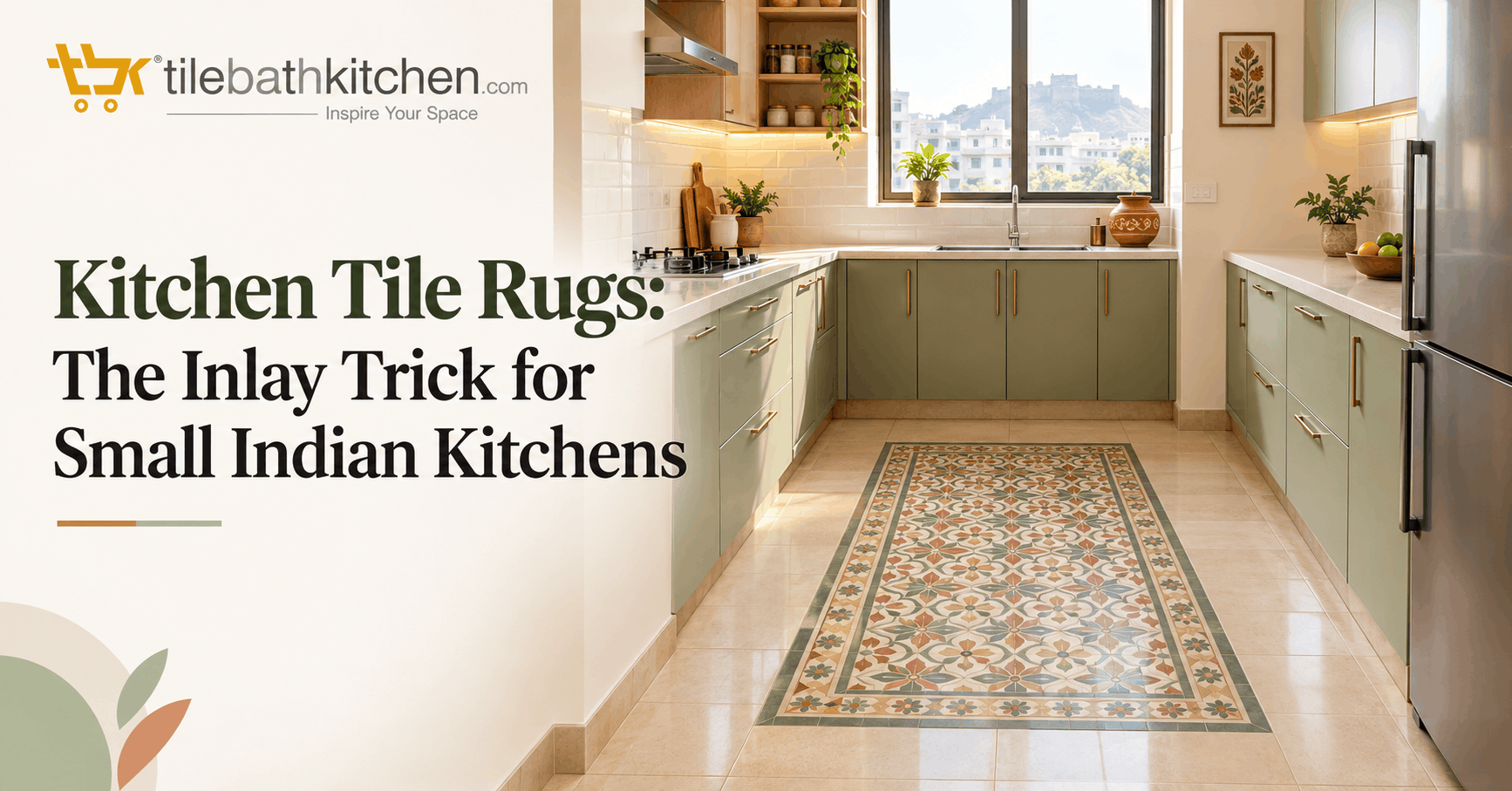
Indian kitchens are often compact, hard-working spaces. Most homeowners play it safe with one plain floor tile throughout, which is practical but rarely memorable. A new idea is changing that: the kitchen tile rug.
A tile rug is a patterned section of tiles laid into an otherwise plain floor, framed so it looks like a rug. It gives the kitchen a focal point and a dose of personality without covering the whole room in pattern. Unlike a fabric rug, it never slips, never soaks up spills, and never needs washing.
Why Tile Rugs Work in Small Kitchens
In a small kitchen, a fully patterned floor can feel busy and make the room look smaller. A plain floor feels clean but flat. A tile rug sits between the two. The plain tiles keep the space open, while the patterned zone draws the eye and makes the kitchen look designed.
They also solve a real problem. Fabric runners in Indian kitchens collect oil, water and food spills, and they can be a slipping hazard. A tile rug gives you the same look in a surface you can simply mop.
Where to Place a Tile Rug
In front of the hob or sink. This is the most natural spot, since it’s where you stand the most and where a fabric runner would usually go. Keep the rug roughly the length of the counter run.
Down the centre of a galley kitchen. In a parallel kitchen, a long patterned strip down the middle can make a narrow room feel intentional instead of cramped.
Under a small dining table or breakfast counter. If your kitchen has a seating corner, a tile rug can mark that zone as separate from the cooking area.
At the kitchen entrance. In open-plan homes, a tile rug at the threshold can signal where the kitchen begins without building a wall.
Choosing the Pattern and Tiles
Encaustic-look and Moroccan patterns are the classic choice. They bring colour and detail and suit both traditional and modern Indian homes.
Geometric patterns such as hexagons, chevrons or simple checks give a cleaner, more modern feel.
Terrazzo-look tiles offer a softer, speckled pattern that suits minimal kitchens.
Border tiles are important. A thin plain or contrasting border around the rug sharpens the edges and makes it read as a rug rather than a random patch of different tiles.
Keep the colours connected to the rest of the kitchen. Pick one or two colours from your cabinets, backsplash or countertop and repeat them in the rug pattern. This ties the room together.
Practical Points for Indian Kitchens
Use anti-skid tiles. Kitchen floors get wet and oily. Make sure both the rug tiles and the surrounding floor tiles have a matte or anti-skid finish.
Match tile thickness. If the patterned tiles and the main floor tiles are different thicknesses, the installer will need to adjust the bed so the surface is perfectly level. An uneven edge is a trip hazard and collects dirt.
Plan grout carefully. Patterned tiles often look best with a grout colour that matches the main background colour of the pattern. In a kitchen, a mid-tone or epoxy grout will hold up better against oil and turmeric stains.
Check the layout before fixing. Ask the installer to dry-lay the rug tiles first so you can see the pattern and the border on the floor before anything is fixed.
Budget and Effort
One of the best things about a tile rug is that it doesn’t need to be expensive. Patterned or encaustic-look tiles can cost more per square foot than plain vitrified tiles, but you only need a small quantity. Spending a little more on a few square feet of special tiles gives a big visual return.
It can also work in a renovation. If you’re replacing only part of a damaged floor, a tile rug can turn that patch into a feature instead of a mismatch.
Mistakes to Avoid
- Making the rug too small. A tiny patch can look like a mistake. Size it to the area it serves, such as the full length of the cooking zone.
- Too many patterns. If the backsplash is already busy, keep the rug simpler, or the kitchen will feel crowded.
- Ignoring the cabinet plinth line. Leave a plain border between the rug and the base cabinets so the pattern doesn’t get cut awkwardly at the edges.
The Bottom Line
A kitchen tile rug is a small decision with a big effect. It adds pattern and personality, marks a zone, and replaces a fabric runner with something you can mop clean in seconds. For compact Indian kitchens that need character without clutter, it’s one of the smartest tile ideas of the year.